May 14, 2026
On Jacksonville’s Eastside, gardening is becoming a practical way to connect children and families to nature, healthy food, and screen-free time outdoors. With LIFT JAX as the lead neighborhood partner, schools, youth-serving organizations, and community groups are activating both campuses and public green spaces so more young people can learn by growing.
That work is happening across multiple sites. The Eastside youth program is designed to serve 157 children and teens across Matthew Gilbert Middle School, Long Branch Elementary School, the Police Athletic League’s Eastside Garden, and John Love Early Learning Center, with partners including LIFT JAX, Success Gardening, and Children’s Home Society of Florida.
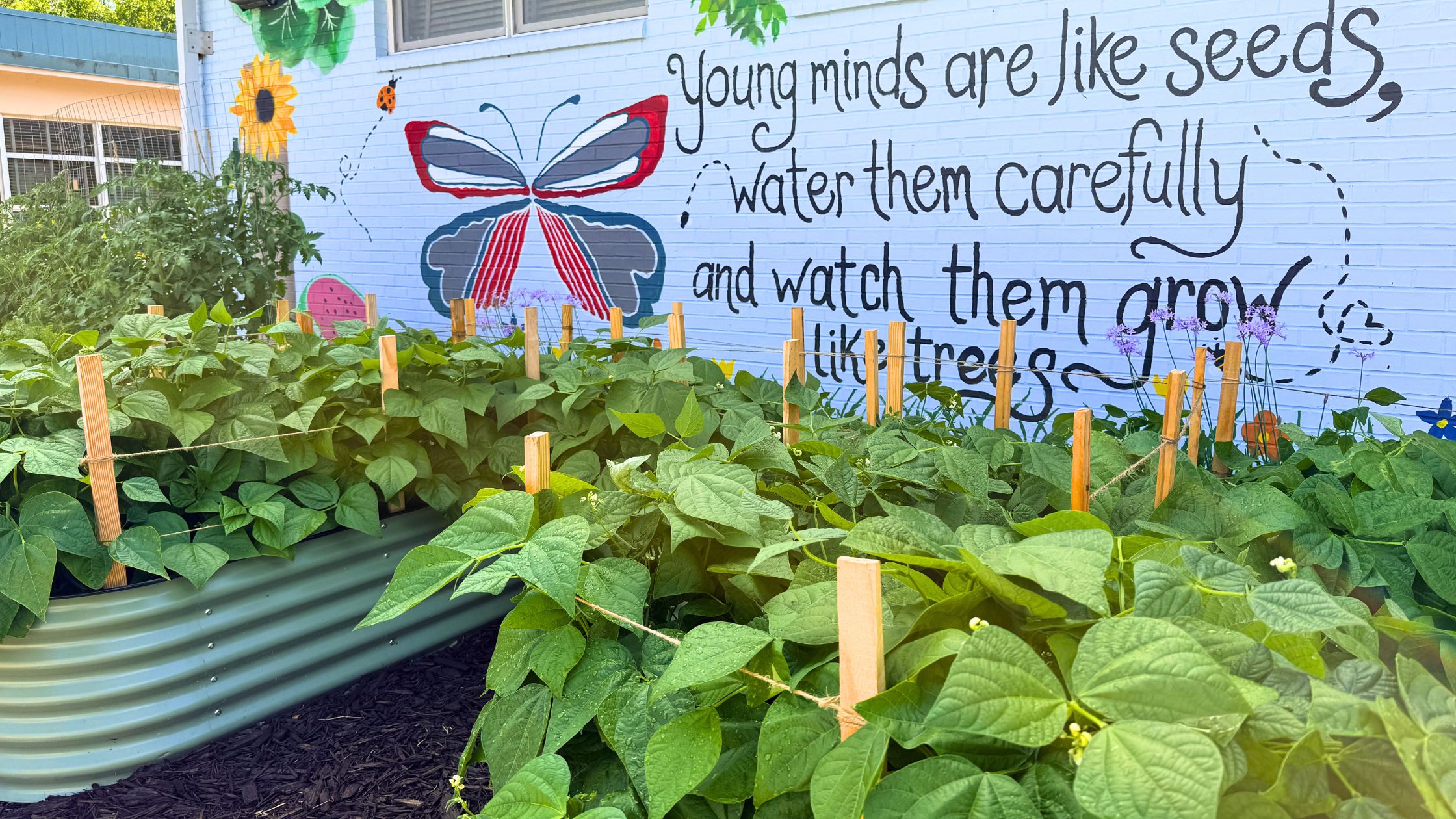
The garden activities themselves are wide-ranging. At Matthew Gilbert Middle School and Long Branch Elementary, students in the Guardians of Nature program are participating in weekly, hands-on learning focused on planting, composting, green entrepreneurship, and park stewardship. At PAL’s Eastside Garden, youth are learning about urban agriculture, food systems, and harvesting fresh produce. At John Love Early Learning Center, students spend time every week in the school’s vibrant garden, which serves as a dynamic outdoor classroom with sensory features, pollinator beds, and shaded zones.

These spaces are doing more than teaching gardening. They are helping young people understand where food comes from, how living systems work, and what it means to care for the places around them. They also offer a meaningful alternative to screen-heavy routines by giving students regular opportunities to work with their hands, move their bodies, and spend time outside.
That neighborhood-wide effort now includes a new community garden asset at A. Philip Randolph Heritage Park. After LIFT JAX and neighborhood partners successfully worked through the necessary approvals with the City of Jacksonville and the parks department, new raised garden beds were installed at the park this spring. Project One Health supported that installation, helping create a shared space that can serve not just one school, but the broader Eastside community.
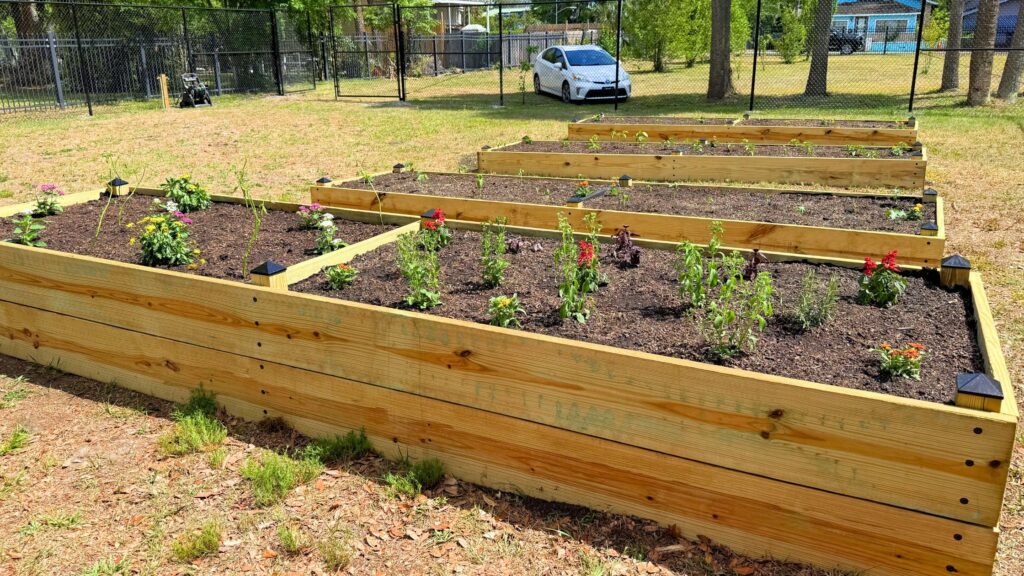
According to Sylvia Powell of Success Gardening, the park gardens will be expanded in multiple phases. One of the beds is ADA accessible and planted with pollinator plants and sensory herbs. Another bed includes okra, which she expects will do well in the heat, and additional beds include bell peppers. Flowers have also been planted alongside the crops to support pollination and help deter bugs.
Powell said the vision for the garden reaches well beyond the initial planting.
“We’re going to be working with local organizations within the community, whether it’s senior groups, church groups, to actually come out and do some workshops, some education, and actually get everybody into nature and teach them about eating healthy and eating fresh fruits and vegetables.”
She is also working with students from Matthew Gilbert to help maintain the garden during the summer, creating another bridge between school-based learning and community building.
That kind of connection is exactly what makes this work important. On the Eastside, gardening is not just about growing vegetables. It is about giving children more time outdoors, helping them build confidence and curiosity, and creating shared spaces where learning, health, and community come together. It is also about making nature feel more present in daily life, whether that happens in a school garden, a park bed, or a hands-on lesson about composting and harvesting.
Eastside partners also provide students and families with the Project One Health digital wellness toolkit and the Less Screen. More Green. 30-day challenge, two resources that offer structured methods for reducing screen time. Partners also introduced Yondr pouches in some programs to help reduce screen distractions and improve participation. Yondr pouches are lockable phone pouches that allow students to keep their devices with them while preventing access during programming.
As the next phases unfold, Eastside partners plan to keep building on this momentum through weekly youth programming, expanded garden spaces, and more workshops and activities that invite the whole neighborhood in.