June 15, 2026
Project One Health JAX is advancing a neighborhood tree planting initiative in Brentwood and Springfield, where new trees are being planned to make walking routes cooler, safer, and more welcoming for families.
As Nancy Powell explained during a recent Project One Health Advisory Council meeting, “There’s no shortage of opportunities to plant trees, and there’s money to do so.” Jacksonville’s tree mitigation fund already exists to help replenish the canopy as protected trees are removed for development, creating a real opportunity to invest in shade where it is needed most.
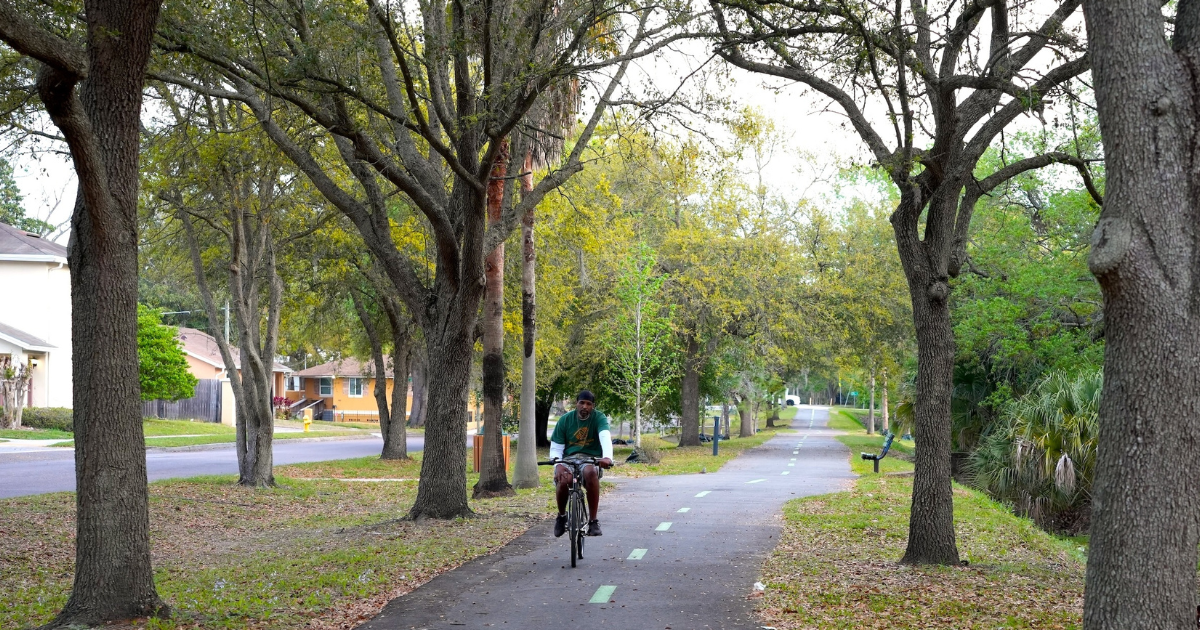
In Brentwood and Springfield, the tree canopy initiative will focus on planting trees within five to 10 blocks of the Emerald Trail/S-Line, schools, parks, libraries, and commercial centers. The goal is to add shade where families and children are already walking, gathering, and spending time outdoors.
This effort is being shaped in collaboration with neighborhood partners. In Brentwood, Project One Health is working with Groundwork Jacksonville. In Springfield, the work is moving forward with Springfield Preservation and Revitalization (SPAR) Council and the Partnership for Child Health. The initiative also involves coordination with City of Jacksonville Urban Forestry, the City’s Department of Parks, Recreation and Community Services, the Chief Resilience Officer Anne Coglianese, and local arborist expertise to identify planting areas and align with broader city planning efforts.
The current target is to plant 20 to 50 trees in each neighborhood in late fall or winter 2026–27. Between now and then, the team is narrowing the geographic focus, identifying specific blocks and segments for planting, and working with Urban Forestry on detailed project assessments.
This work also comes at a critical time for Jacksonville. Extreme heat is becoming a growing risk, with more very hot days and warmer nights expected in the decades ahead. At a recent Advisory Council meeting, Coglianese shared that Duval County may see about a 40 percent increase in the number of days with a heat index above 90 degrees by mid-century, along with 50 to 100 additional warm nights above 75 degrees each year.
Tree canopy matters for more than appearance. In Jacksonville’s hottest months, shade can make a meaningful difference in whether families feel comfortable walking to school, visiting a park, or choosing to spend more time outdoors. More trees can help reduce heat, improve the pedestrian experience, and strengthen neighborhood environments in ways that support the broader Project One Health goal of helping children and families spend less time indoors and more time outside.
Community engagement will be a key part of the next phase. This summer, neighborhood leaders will focus on education, outreach, and property-owner consent, since planting along neighborhood streets and easements depends on local support and participation. Final project plans are expected to be completed and presented this fall for funding approval through the Tree Commission.
Powell also underscored the urgency of the work in simple terms: “The fund keeps growing… trees are coming out for development faster than we can plant them.” That reality makes neighborhood planning and city coordination especially important. The opportunity is there, but planting trees in public rights of way requires careful analysis, communication with neighbors, and long-term follow-through.
Planting trees is only part of the work. Long-term care, maintenance, and community support will all be important to helping these investments last. As this planning continues, the tree canopy initiative reflects a practical truth: healthier neighborhoods are built not only through programs, but also through the everyday physical conditions that make outdoor life easier, cooler, and more connected.